


Liene Photo
3.9237.00 Reviews
App Specs
- Version
- 2.5.730
- Updated On
- License
- Free
- Downloads
- 100,000+
- Developer
- Hannto Technology
- Categories
- Photography
- Platform
- Android
Screenshots


 Analysis by AppCompare
I approached Liene Photo as a practical photography companion rather than as a replacement for every camera app on a phone. Its focus is clear from the start: it is a free photography app from Hannto Technology, aimed at people who want a simple way to work with photos without committing to a complicated editing suite. After spending time with it, I found the strongest appeal in its low barrier to entry. You can try it without paying, and its Everyone content rating makes it approachable for a broad range of users.
That simplicity is also the key to judging it fairly. Liene Photo is not the sort of tool I would choose when I need a full professional workflow, detailed color management, or the most advanced controls available on mobile. Instead, I see it as a lightweight option for everyday image tasks and casual creative work. The app has reached more than 100K installs, while its average score sits at 3.6 from over 500 ratings. Those figures suggest a useful but mixed experience: enough people find value in it, yet it is not universally polished for every phone or every photography habit.
How Liene Photo feels in its current form
The current release is version 2.5.730, and the app has been available since July 13, 2021. That history matters because this is not a brand-new experiment with an untested identity. It has had time to establish what it wants to be, and the result feels more like a focused utility than an ambitious all-in-one studio. The store presents the brief idea “Liene Photo,” but in use, I think of it as a convenient layer between taking a picture and deciding what to do with it afterward.
I like that the app does not require a photography background to make sense. A first-time user can approach it with a simple goal: improve a picture, prepare it for sharing, or give an ordinary shot a little more personality. That makes it suitable for quick personal projects, social posts, family images, and small visual adjustments when opening a large editor would feel excessive.
My recommendation depends heavily on expectations. If you want a fast, friendly photography experience and prefer learning by trying controls rather than reading a manual, Liene Photo is easy to consider. If you expect the depth of a desktop editor compressed into a phone screen, you will probably notice its limits quickly. The best reason to use it is convenience, not technical ambition.
A realistic everyday workflow
Imagine taking a slightly dull photo during a walk, a meal, or a family gathering. You may not want to sit down at a computer, sort through a large library, and build a carefully managed edit. With Liene Photo, the sensible workflow is to open the image, make a modest adjustment, inspect the result at normal viewing size, and save or share it if it looks better. That sounds basic, but basic is often exactly what people need when the alternative is leaving the image untouched.
I found it helpful to decide on the purpose of the picture before editing. For a profile image, I would prioritize a clean crop and a natural appearance. For a casual post, I might accept a more noticeable visual change. For an important memory, I would keep the original and treat the edited copy as a separate version. This habit is particularly important with a lightweight app because speed can encourage impulsive changes. A quick editor is useful, but it should not replace a careful backup routine.
Worth Reading Before You Choose

EA SPORTS FC Mobile 26 Is a Bigger Football Game, but It Takes Time

Flipboard Shows What News Apps Must Do Beyond the Feed

Switching to Android Auto Means Rethinking Your Driving Routine

Google Calendar Makes a Crowded Week Easier to Manage

Ludo King Makes the Most of the Minutes Between Plans

Baby Panda World Brings Quick Play to Modern Phones, but Its Game Library Feels Busy
Another practical tip is to judge edits away from the control screen. A change that looks impressive while you are adjusting it can feel too strong once the image is viewed in a message thread or gallery. I recommend making one change at a time, briefly checking the complete picture, and resisting the temptation to keep adding effects simply because they are available. Liene Photo works best when the user supplies the restraint.
Who will get the most from it
The app is a good match for casual photographers, students, families, and anyone who wants a less intimidating entry point into mobile photo editing. It also makes sense for users who do not want to pay before discovering whether a photography tool fits their routine. Since it is free, the initial decision is relatively easy: install it, test it with a few ordinary images, and decide whether its handling suits you.
I can also see a role for it among people who use an older Android phone. The minimum operating system is Android 7.0, so the compatibility range is broader than apps that require a recent system. That does not guarantee identical performance on every device, but it does make the app relevant to users who are not upgrading their phones frequently.
Beginners should benefit most from keeping their first session deliberately small. Rather than importing a whole collection, I would select three different photos: a bright outdoor image, a darker indoor image, and a portrait or close-up. Those examples reveal more about an editor’s usefulness than repeatedly testing one perfect picture. They also help you decide whether Liene Photo gives you enough control for your own images.
Where it sits beside familiar alternatives
The usual alternatives fall into two broad groups. The first is the editing tool already included with a phone’s gallery. That option is often faster for a single crop or minor correction, and it may feel more integrated with the device. Liene Photo becomes more interesting when you want a dedicated photography space rather than a quick gallery action, especially if the built-in editor feels too limited or awkward.
The second group consists of established creative editors with extensive adjustment panels, layers, selective edits, and export choices. Those tools are better for photographers who already know exactly what they want to control. They are also more demanding. Their interfaces can slow down a simple task, and their broader feature sets may be unnecessary for someone who only wants a presentable image in a few minutes.
Liene Photo occupies the middle ground, although it leans toward simplicity. It is more purposeful than doing nothing, but less suitable than a specialist editor for a carefully repeatable workflow. I would choose it for convenience and approachability, while choosing a deeper alternative for client work, detailed retouching, or images that need consistent treatment across a large set.
What the version history tells existing users
The move to version 2.5.730 shows that the app has developed beyond its earliest release, but I would be careful not to read that number as proof of a particular feature set or a dramatic redesign. A version label tells me that the product has continued through updates; it does not by itself explain how every part of the experience has changed. For someone already using Liene Photo, the practical question is whether the current release feels dependable on their own phone and still matches their editing habits.
Existing users should approach an update as a chance to review their workflow rather than assuming that every change will be visible or transformative. Before updating, I would make sure important originals are stored somewhere safe and note the steps I use most often. Afterward, I would test those steps with nonessential images first. This is sensible for any photo app because a small change in handling, saving, or navigation can matter more to a regular user than a new visual option.
For a new user, the current version is the one that matters most. There is little value in judging the app solely by how it may have felt at launch. The relevant test is whether version 2.5.730 lets you complete your own common tasks without friction. I would give it a fair trial using real pictures, not only sample shots that are already well lit and attractive.
Small habits that improve the experience
One useful habit is to keep a “before” copy outside the editing session. Even if you expect to undo changes, a separate original gives you a reliable comparison and protects against accidental overwriting. I would also avoid making decisions while zoomed in too closely. Fine details can distract from the overall balance of a picture, and an edit that looks perfect at high magnification may not improve the image when viewed as a thumbnail.
A second tip is to edit for the destination. A picture intended for a messaging app does not need the same treatment as one you plan to display on a larger screen. If the image will be seen quickly, composition and clarity matter more than subtle adjustments. If it is a personal archive image, preserving a natural look may be more valuable than adding a strong style. Liene Photo is easier to use well when the goal is defined before the controls are touched.
A third insight is that free access changes the way I evaluate the app. I do not need it to replace every paid editor to consider it worthwhile. It only needs to handle a useful slice of my routine without making that routine harder. That is a lower bar, but it is also a realistic one. For occasional users, avoiding unnecessary cost and complexity can be more important than having a long list of advanced tools.
Where the experience may fall short
The main limitation is the same quality that makes Liene Photo approachable: a simple photography app may not satisfy users who want precise control. If your work involves carefully matching colors, editing many images consistently, or making complex local corrections, you may outgrow it. In that situation, a more specialized editor is the better choice, even if it takes longer to learn.
I also would not install it expecting the phone itself to become a professional camera system. An editing app can help you make better decisions about an image, but it cannot recover every detail from a poorly captured shot or replace good lighting and composition. Users who mainly want manual camera controls should look toward a camera-focused application instead of assuming that a photography label means the same thing across every product.
The mixed average rating is another reason to test it personally rather than relying on enthusiasm from other users. A 3.6 average from 581 ratings indicates that the experience is not equally satisfying for everyone. Differences between phones, personal expectations, and preferred editing styles can all affect that result. I would not treat the score as a rejection, but I would avoid installing it for an urgent project without first checking how it behaves with your own images.
There is also a difference between being free and being frictionless. A free app can still take time to understand, and a simple interface can still leave you unsure about the best order for edits. My approach is to learn one workflow and repeat it before exploring everything else. If the app makes that basic routine feel comfortable, it has earned a place on the phone. If even common tasks feel confusing, no amount of extra experimentation is likely to make it the right tool.
Questions worth answering before you install
Is it suitable for children or shared family use? Its Everyone content rating makes it broadly accessible, but I would still treat photo editing as a shared-device activity that deserves ordinary supervision, especially when personal images are involved. The rating tells you about content suitability, not whether every family member will understand saving and sharing choices in the same way.
Will it work on an older Android device? The Android 7.0 minimum makes it viable for a wider range of phones than many newer apps. Still, compatibility is only the first step. I would test opening, editing, and saving a few pictures on the actual device, because the age of a phone can affect responsiveness even when the operating system meets the requirement.
Should you use it instead of your phone’s built-in editor? I would use Liene Photo when I want a dedicated photography workflow or a different approach from the gallery tool. For a one-second crop, the built-in option may remain quicker. The choice comes down to whether you value an additional editing environment enough to justify keeping another app available.
Is it a good choice for serious photography? Only at the casual end of that phrase. It can be useful for preparing everyday images, but I would not make it the center of a professional archive or a demanding production pipeline. A specialist editor is a better fit when repeatability, precision, and deeper control matter more than speed.
What I would watch going forward
For future releases, I would pay attention to how Hannto Technology balances ease of use with control. The app does not need to become crowded with specialist features, but regular users benefit when common tasks become clearer and more dependable. I would especially value improvements that reduce hesitation around editing, comparing, and preserving originals, because those details shape trust more than a flashy addition.
I would also watch how well the current direction serves both older devices and newer photography habits. Supporting Android 7.0 keeps the potential audience broad, while modern phones can produce large, detailed images that place different demands on an app. The best evolution would preserve the accessible character of Liene Photo without making it feel dated to users with more capable cameras.
My final view is positive but measured. Liene Photo is a sensible free option for people who want to make everyday pictures more usable without entering a complicated editing ecosystem. I like its approachable purpose, its broad Android compatibility, and the fact that beginners can test it without a financial commitment. At the same time, I would skip it for demanding professional work, intricate retouching, or anyone who already feels comfortable in a deeper editor.
If I were recommending it to a friend, I would say this: install it when you want a straightforward photography companion, try it with your own ordinary images, and keep your originals separate while you learn the workflow. It is most convincing when used as a quick, practical tool rather than judged as a complete replacement for every alternative. That distinction makes the current version easier to appreciate and gives you a clear way to decide whether it belongs in your personal photo routine.
Pros
- Simple tools make quick photo edits easy for beginners.
- Supports creative collages for combining several pictures.
- Useful filters can give photos a consistent visual style.
- Basic editing works well for casual social media content.
- Clean interface makes the main features easy to find.
Cons
- Some advanced tools may require in-app purchases.
- Export options may be limited compared with professional editors.
- Heavy filters can reduce image quality or look unnatural.
- The app may contain advertisements during editing.
- Performance can vary on older Android and iOS devices.
FAQs for Liene Photo
What is Liene Photo, and what can I use it for?
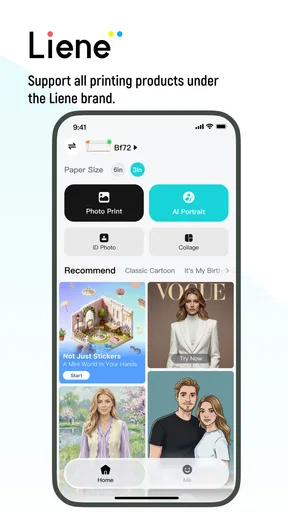
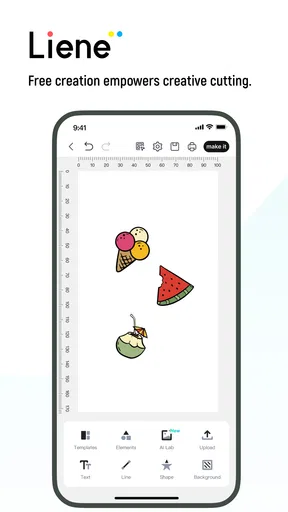
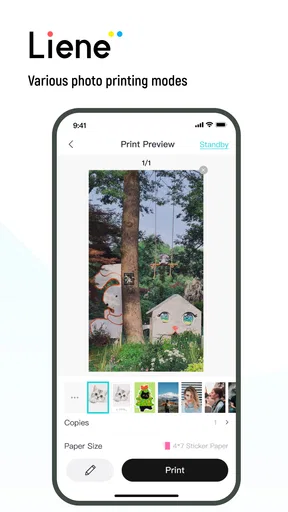
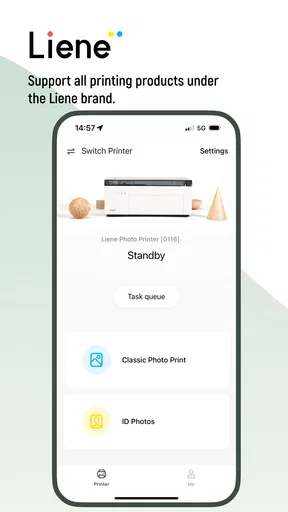
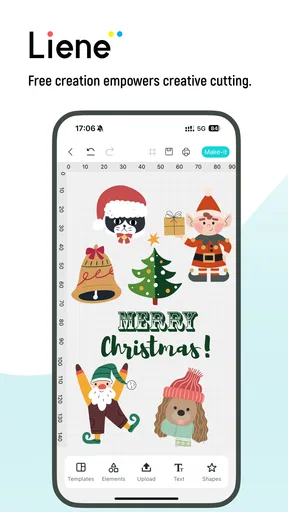
Liene Photo is a companion app designed to work with compatible Liene portable photo printers. After connecting the printer, you can select images from your phone, make basic adjustments, add frames, stickers, filters, text, or collages, and then send the finished design to print. It is mainly intended for quick, small-format prints rather than professional photo editing or large, high-resolution printing.
Is Liene Photo compatible with every Liene printer and smartphone?
No. Compatibility depends on the specific Liene printer model, its supported connection method, and your device’s operating system. Before downloading, check the printer packaging, user manual, or the official app listing to confirm that your model is supported. You may also need to enable Bluetooth, Wi-Fi, or local-network permissions, depending on how your particular printer communicates with the app.
Does Liene Photo require an internet connection to print pictures?
An internet connection is not always necessary for the actual printing process. Many compatible Liene printers connect directly to a phone through Bluetooth or a private Wi-Fi connection, allowing you to print locally. However, internet access may be useful or required for downloading the app, updating it, loading certain online resources, or accessing additional templates and content. The exact requirements vary by printer model.
What editing tools and printing options are available in Liene Photo?
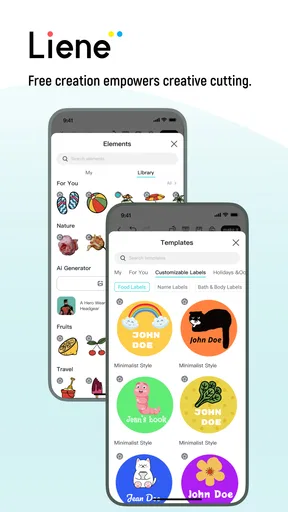
Liene Photo generally provides practical tools for preparing images before printing, including cropping, rotation, brightness or color adjustments, filters, decorative frames, stickers, text, and collage layouts. Some versions may also include templates or other creative features. The available tools can differ by app version and printer model, so users looking for advanced retouching, layers, or professional color management should not expect the same capabilities as a full desktop photo editor.
Is Liene Photo free, and are there any additional costs to consider?
The Liene Photo app is typically available as a free download, but using it requires a compatible Liene printer and suitable printing supplies. Photo paper, ink cartridges, or integrated print-film packs may need to be purchased separately, depending on the printer model. Some optional creative resources could also vary by region or app version. Check the official store listing and your printer’s consumable requirements before buying.


